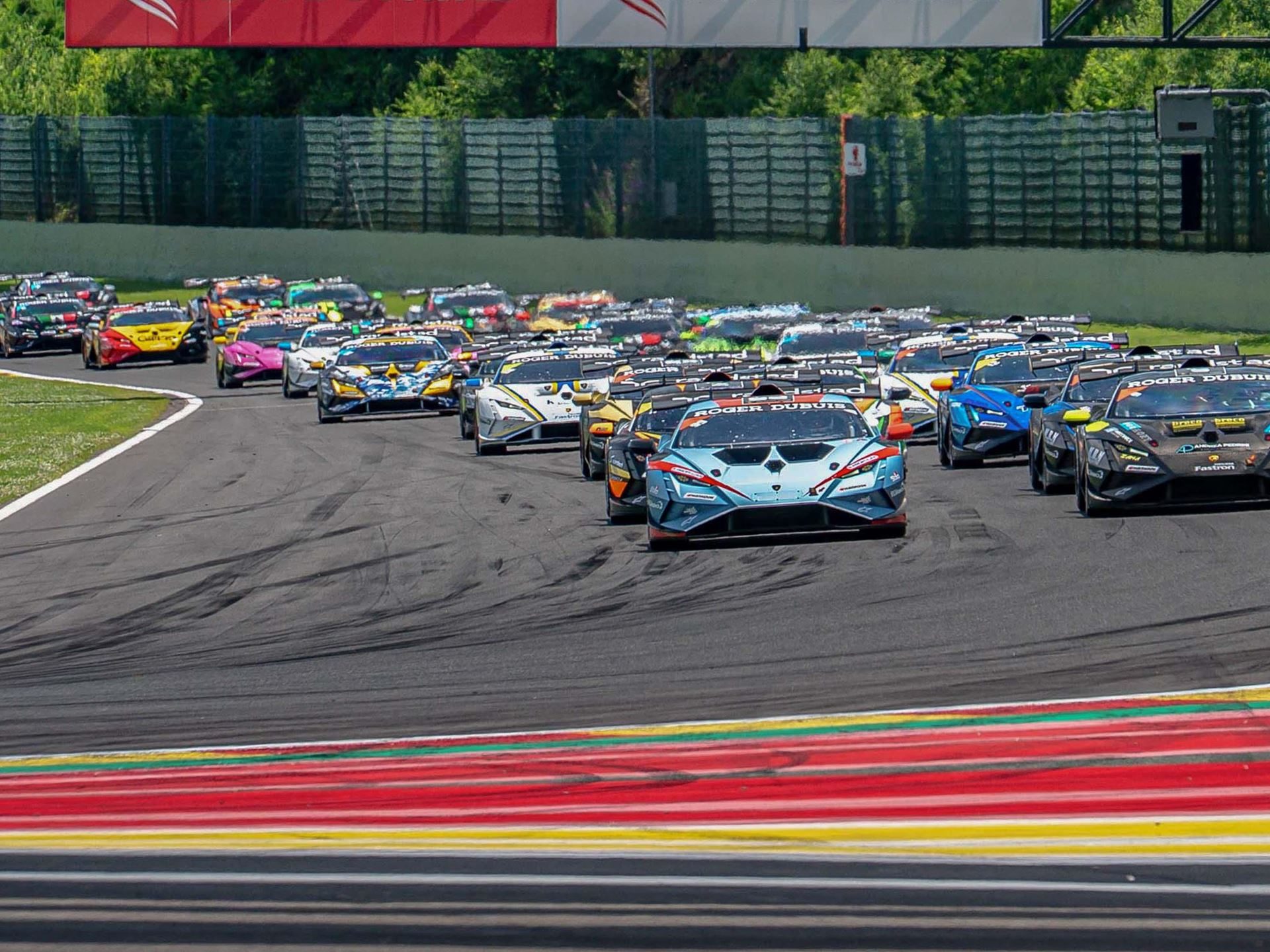
Lamborghini's Super Trofeo Europe Hits Monza with Its Biggest Grid
A one-make series that launched with a modest grid in 2009 arrived at its tenth season with approximately 50 cars and 22 teams.
Ten years after its inaugural season in 2009, the Lamborghini Super Trofeo Europe opened its 2018 campaign at Monza on April 21–22 with approximately 50 cars fielded by 22 teams, the largest grid the European series had ever assembled.
The Evo's aerodynamic overhaul, engineered with Dallara
Lamborghini says the Huracán Super Trofeo Evo's aerodynamic package was developed in collaboration with Dallara Engineering and Lamborghini Centro Stile, combining race-car engineering rigor with design-house aesthetics.
A grid stacked with drivers under 23
The 2018 entry list featured a striking number of young drivers, including 22-year-old Davide Venditti, 18-year-old James Pull, 21-year-old Frederik Schandorff, and 17-year-old Giacomo Altoè, alongside headline debutant Fabian Vettel racing with Konrad Motorsport.
Calendar built around Blancpain GT weekends
Five of the six double rounds ran on the same weekends as the Blancpain GT Series, putting Super Trofeo cars directly in front of GT racing fans, team principals scouting talent, and sponsors evaluating motorsport investments.
Roger Dubuis joins the paddock for 2018
The 2018 season introduced a partnership with Swiss luxury watch brand Roger Dubuis, fitting a pattern across high-end motorsport where luxury brands attach themselves to racing series whose paddock audience overlaps with their customer base.
Misano's return and a World Final at Vallelunga
Misano returned to the calendar after a five-year absence, while Vallelunga was chosen to host both the season finale and the Lamborghini World Final, continuing a tradition that began at the same Roman circuit in 2013.
The Evo's competitive debut in Asia before Monza
The Huracán Super Trofeo Evo had already turned laps in anger at Sepang during the Asian series opener and in pre-season testing at Monza, but the 2018 European round represented its first appearance in the championship's most competitive continental theater.
From promotional exercise to motorsport infrastructure
By its tenth season, the record grid, the Evo's aerodynamic refinement, a young-driver pipeline feeding GT3 programs, and a luxury brand partner all pointed to the same conclusion: the Super Trofeo had evolved from a promotional exercise into genuine, self-sustaining motorsport infrastructure.