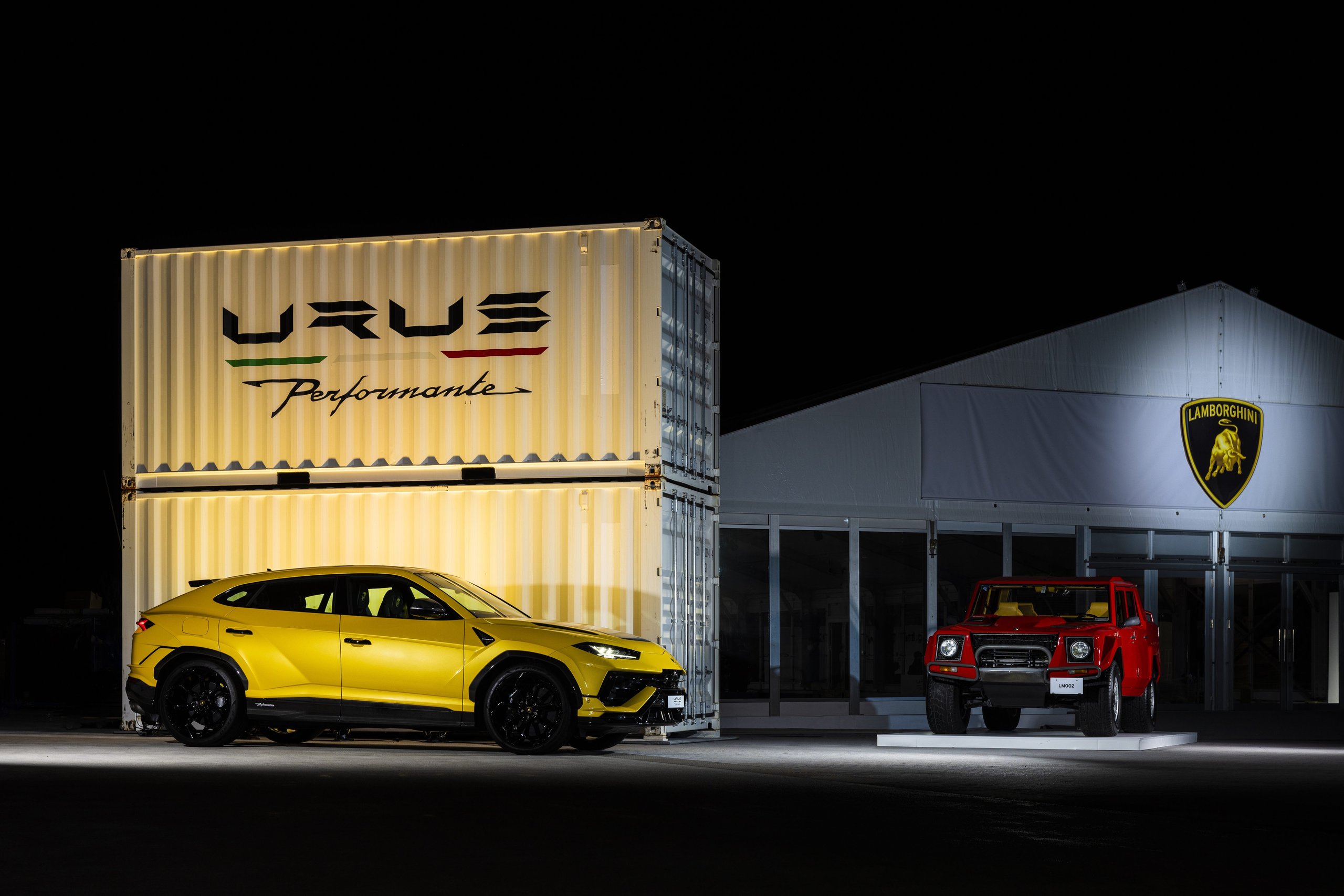
How the Urus Borrowed Its Face from the Countach and Its Shoulders from the LM002
Lamborghini needed visual DNA, not just horsepower, to make an SUV worthy of Sant'Agata Bolognese.
Mitja Borkert's design team framed the solution not in powertrain numbers or lap times but in visual DNA: specific proportions, surface treatments, and heritage callbacks that would make the Urus recognizable as a Lamborghini from any angle.
Urus and LM002: a lineage on the road
Two specific design elements carry over almost directly from the LM002: hexagonal wheel arches and a small triangular air outlet on the side panel adorned with an Italian flag.
The supercar proportions behind the SUV
Lamborghini says the Urus adopts the two-thirds body, one-third window ratio found on its super sports cars, pressing the glasshouse down into a muscular body just as the Huracán and Aventador do.
The Countach geometry the Urus inherited
Lamborghini explicitly credits the Countach for the diagonal lines running across the Urus's bonnet and rear glass, embedding that origami-fold surfacing into an SUV profile to anchor it in the brand's most recognizable silhouette.
The two ancestors the Urus quoted
Lamborghini's answer to making a tall vehicle look like a supercar brand's product was blunt and effective: borrow proportions from its mid-engine cars and heritage cues from the LM002.
Design language that stretched beyond two doors
The Urus demonstrated that Lamborghini's hexagons, sharp creases, and aggressive proportions could stretch beyond two-door supercars without losing coherence, a lesson that directly informed the Revuelto and the Temerario.
The brand credibility test
Lamborghini needed to convince enthusiasts, collectors, and skeptics that a vehicle tall enough to accommodate child seats and ski bags was a legitimate product of Sant'Agata Bolognese.
The LM002's heritage cues, reinterpreted
The triangular side vent on the Urus functions partly as a heritage marker from the LM002 and partly as a visual anchor for the Italian flag motif, reinforcing the car's identity as born and made in Italy.
SUV generations, side by side
The LM002's hexagonal arches were a functional necessity for enormous off-road tires, but Borkert's team reinterpreted them on the Urus as a stylistic signature that gives the body a planted, wide-track stance.
Decades of design DNA in one lineage
Few cars in the luxury performance SUV segment offer the Urus's range of visual personality through configuration alone, and that range is a product of how deeply supercar proportions and heritage cues are baked into the underlying form.
The aggressive benchmark no rival replicated
Ferrari's Purosangue and Aston Martin's DBX both chose softer, more organic silhouettes, implicitly acknowledging that Lamborghini had already claimed the aggressive end of the design spectrum with the Urus.
The design principle that outlasts any powertrain
The Countach lines and LM002 shoulders were never just about making an SUV look exciting — they proved that Lamborghini's visual identity could survive any body style the market demanded, a principle that grows more important as the brand moves toward hybrid and electrified powertrains.