How Lamborghini's Billion-Euro Year in 2017 Bankrolled the Brand You Know Today
Record revenue, record deliveries, and a factory doubling in size—all for one vehicle.
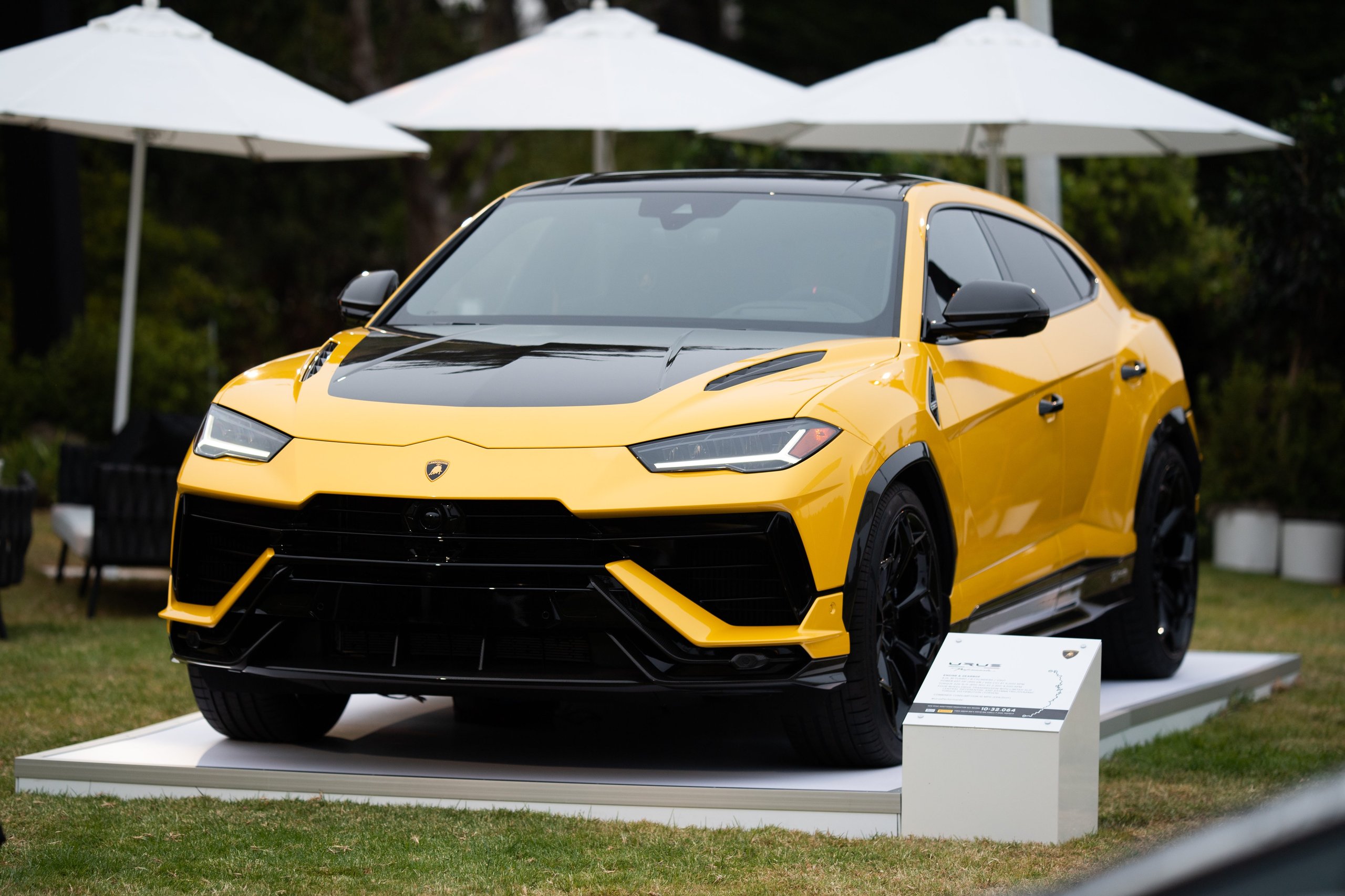
Lamborghini crossed the billion-Euro turnover threshold for the first time in Fiscal Year 2017, pushing revenue to 1,009 million Euro while delivering 3,815 cars worldwide—all in preparation for the Urus Super SUV, unveiled that December.
Supercars doing the heavy lifting
The Huracán delivered 2,642 units in 2017, up 12%, while the Aventador contributed 1,173 units with 6% growth, and new variants like the Huracán Performante collected lap records at circuits around the world.
Rebuilding the economic foundation
Lamborghini doubled its Sant'Agata Bolognese headquarters from 80,000 to 160,000 square meters, hired 500 workers, and rebuilt its entire economic foundation around a vehicle that shared more DNA with the Volkswagen Group's MLB Evo platform than with any mid-engine supercar.
From 3,815 to 10,747
The Urus gave Lamborghini the financial muscle to develop the Revuelto's hybrid V12 architecture and invest in the Temerario's twin-turbo V8 hybrid system, fueling growth from 3,815 deliveries in 2017 to 10,747 in 2025.
Growing revenue, not just volume
Lamborghini's sales and marketing chief, Federico Foschini, told Car and Driver that the brand is planning "crazier" special models while looking to increase customization without expanding total sales figures.
A concept that shaped the hybrid pivot
Lamborghini's 2017 Terzo Millennio concept, a collaboration with MIT, explored supercapacitor energy storage, self-healing carbon fiber, and electric propulsion—research directions that fed directly into the brand's current hybrid strategy.
Domenicali's "unprecedented double challenge"
Stefano Domenicali, then Chairman and CEO, described the simultaneous effort of launching new supercars while doubling factory capacity as an "unprecedented double challenge"—a framing the article calls corporate understatement.
Credibility when it mattered most
The Aventador S and Huracán Performante were genuine performance statements that reinforced the brand's credibility at the exact moment Lamborghini was asking purists to accept an SUV with a raging bull on the hood.
The production capacity gamble
Doubling production capacity to more than 7,000 units per year meant Lamborghini was projecting that a single model, the Urus, would eventually outsell the Aventador and Huracán combined.
Volume funded personalization
The Ad Personam customization program now touches 94% of deliveries, meaning nearly every Lamborghini leaves the factory with at least one bespoke element—proof that volume did not kill exclusivity.
The Porsche playbook, applied
Lamborghini's strategy mirrors the playbook Porsche refined with GT3 and GT2 variants, where base volume funded by the SUV gives the company room to experiment with low-run specials that collectors will fight over.
Hybrid yes, fully electric no
Lamborghini shelved its first planned electric car after CEO Stephan Winkelmann concluded the target market was "close to zero," choosing instead a hybrid strategy that gives the brand a credible emissions-reduction path without abandoning internal combustion.